Preclinical research is an essential stage of drug development, providing information on the safety, efficacy, pharmacokinetics (PK), and pharmacodynamics (PD) of drug candidates before clinical studies. Selecting an appropriate animal model is particularly important because species differences in physiology, metabolism, and drug response can affect the interpretation and translational value of preclinical findings.
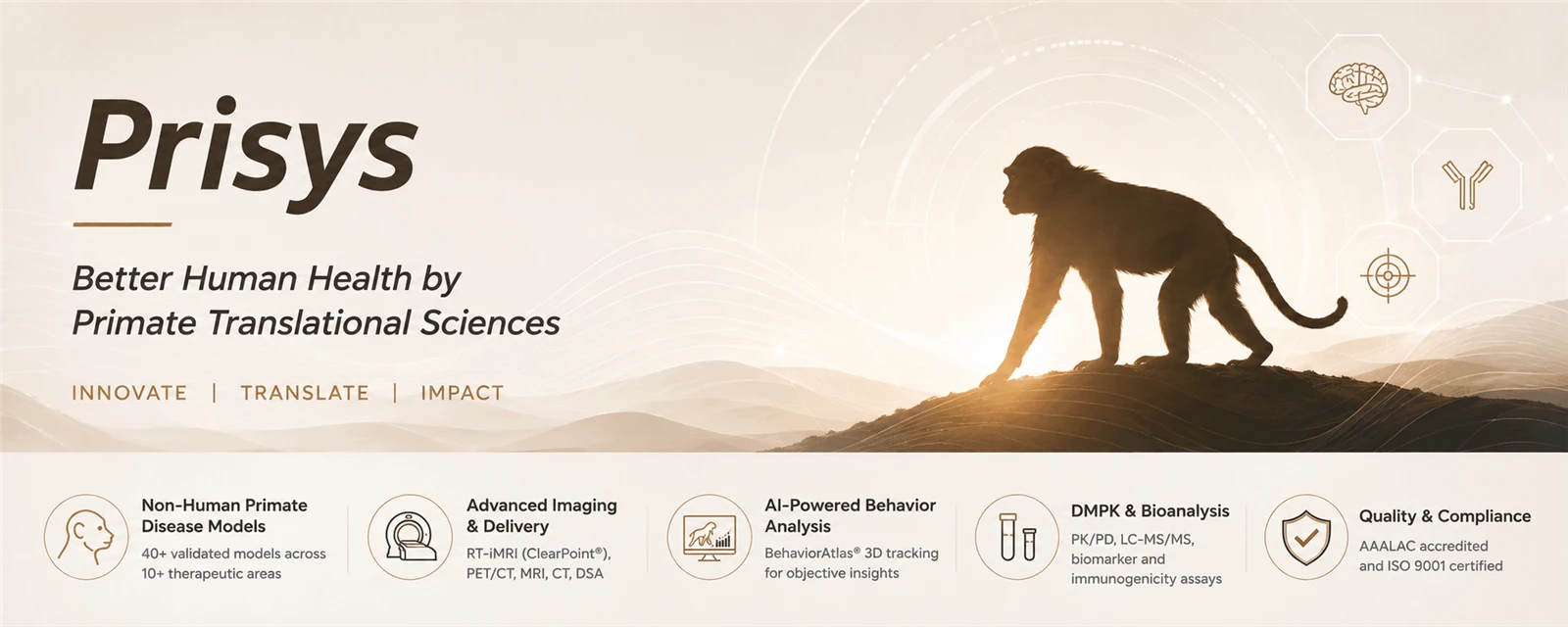
Prisys Biotechnologies is a preclinical CRO specializing in nonhuman primate (NHP)-based translational research. Cynomolgus macaques are among the NHP species used in preclinical research because of their physiological and biological similarities to humans. These models can be particularly useful for investigating drug disposition and transporter-related mechanisms, where species differences may influence drug absorption, distribution, metabolism, and excretion (ADME).
Why Cynomolgus Macaques?
Cynomolgus macaques are widely used in biomedical research and share important anatomical, physiological, and genetic characteristics with humans. These similarities can support the evaluation of drug responses and provide complementary information to studies conducted in rodents and other preclinical species.
Cynomolgus macaques can also be used to investigate pharmacokinetic and pharmacodynamic characteristics in an integrated physiological setting. Depending on the research question, studies may include drug exposure assessment, biomarker analysis, tissue distribution, and other endpoints relevant to drug disposition and efficacy.
However, the suitability of cynomolgus macaques depends on the specific drug, target, transporter, and study objective. Species differences in transporter expression and activity should be considered when interpreting results and selecting an appropriate model.
Prisys Biotechnologies' NHP Research Capabilities
Prisys Biotechnologies has established capabilities in NHP-based preclinical research, supported by experienced scientific and technical teams and dedicated research infrastructure. The company provides customized NHP research services across pharmacology, safety evaluation, translational research, biosafety research, and other preclinical applications.
NHP studies can be designed to integrate multiple endpoints, including PK/PD assessments, biomarkers, imaging, behavioral measurements, and other analyses, depending on the scientific objectives of the program. Study design, animal selection, procedures, and analytical requirements are evaluated according to the specific research question.
Example: Cynomolgus Monkey Model of Renal Fibrosis
Prisys Biotechnologies has collaborated with UCB to develop a unilateral ureteral obstruction (UUO) model in cynomolgus macaques for research into renal fibrosis. The model provides a platform for investigating renal fibrosis and evaluating therapeutic approaches in an NHP setting.
An NHP model can be particularly relevant when the pharmacological target has limited cross-reactivity between humans and conventional laboratory species. In such cases, an appropriately characterized NHP model may provide additional translational information for evaluating candidate therapeutics, including biologics and other target-specific approaches.
Supporting Translational Drug Development
In addition to individual disease models, Prisys Biotechnologies supports pharmaceutical and biotechnology companies through its NHP research platform and contract research services. Depending on project requirements, these services may include NHP pharmacology, safety-related studies, translational research, biosafety research, and specialized NHP procedures.
Prisys Biotechnologies has also contributed to peer-reviewed research involving NHP models in areas including liver fibrosis, lung fibrosis, renal transplantation and rejection, diabetes, and Alzheimer's disease. These studies contribute to the broader application of NHP models in translational biomedical research.
Conclusion
Cynomolgus macaques can provide valuable translational information in preclinical drug development, including studies involving pharmacokinetics, pharmacodynamics, drug disposition, and transporter-related mechanisms. Their biological similarities to humans make them a useful complement to other preclinical models, while species-specific differences should be considered when designing and interpreting studies.
With experience in NHP disease modeling and integrated preclinical research, Prisys Biotechnologies supports pharmaceutical and biotechnology companies in applying NHP models to scientifically defined development questions. The appropriate model and study design should be determined according to the drug modality, biological target, and objectives of the individual program.