


Innovative drugs cover multiple therapeutic areas, and the costs, time, and risks associated with candidates entering clinical development increase significantly. A rational research strategy must be employed, making full use of existing technologies, concentrating resources on candidates with development potential, and eliminating those without a viable future to minimize resource waste on projects unlikely to succeed.
There is no simple, ready-made answer on how to mitigate clinical development risks, increase success rates, and accelerate the approval of safe and effective drugs. Furthermore, research strategies vary widely across different therapeutic fields. One of the most praised approaches is using mechanistic and proof-of-concept (PoC) validation in early-stage research. The 2024 "Guidelines for Non-Clinical Studies of Adeno-Associated Virus (AAV) Vector Gene Therapy Products" also explicitly mention the importance of PoC. But what exactly is validated through PoC?
Gene therapies are designed based on a deep understanding of disease mechanisms, and are developed to effectively express in target tissues or cells, bind to target sites, and modulate their function to exert pharmacological effects that alter disease progression and result in clinical benefit. Off-target effects are considered adverse. The process can be briefly described in the following steps: ① The drug reaches the target cells. ② The drug expresses in target cells and binds to the target site. ③ The target site induces a pharmacological effect. ④ This effect brings about clinically significant changes (therapeutic outcomes).
Understanding the drug's mechanism of action early in development helps guide drug design and optimization, allowing for the selection of the best candidates for further development. In later stages, methods can be employed to validate the mechanism of action, laying the groundwork for continued development and ultimately increasing the success rate and reducing risks.
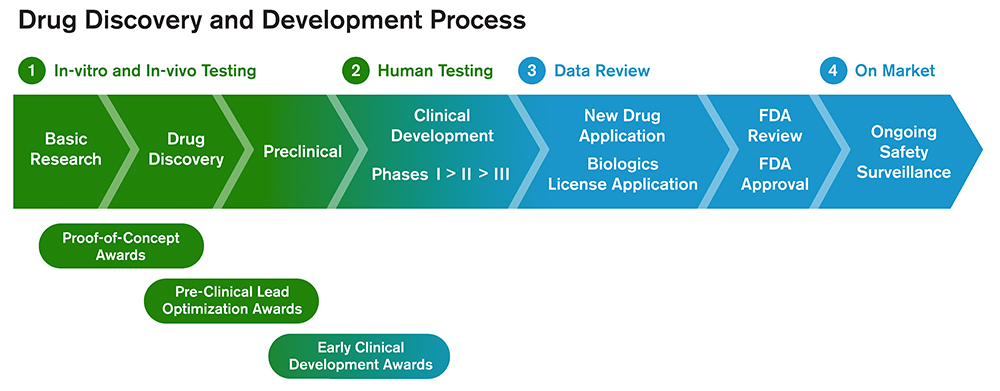
Preclinical Proof of Concept (PoC) involves in vitro and animal studies to initially verify whether the AAV-based therapeutic strategy is feasible, including assessing efficacy and preliminary safety. It marks the critical transition from laboratory research to preclinical development (GLP toxicology studies).
Core Objectives of PoC
- Validating Scientific Hypotheses: Verifying whether the AAV vector can deliver the target gene, whether it expresses in target tissues, and whether it can improve disease phenotypes.
- Risk Control: Identifying potential issues (e.g., immunogenicity, off-target effects) to minimize the risk of failure during later development.
- Optimization: Determining the optimal vector design (serotype, promoter), administration route, and dose range.
Why is PoC Needed?
- Scientific Validation: Ensure that gene editing/replacement strategies are effective in living models and avoid false positives seen in cell-based experiments. Confirm that the AAV's tissue targeting matches expectations (e.g., AAV9's ability to cross the blood-brain barrier).
- Reducing Development Risk: Approximately 70% of drug development failures stem from insufficient efficacy or toxicity issues in preclinical stages (Nature Reviews Drug Discovery). PoC helps screen out ineffective strategies early.
- Supporting IND Applications: PoC data is a key reference for regulatory agencies (e.g., FDA, EMA) to evaluate the rationale behind clinical trials. Lack of PoC could result in the rejection of an IND.
- Attracting Investment: Clear PoC results provide the basis for financing and partnerships, especially in the high-cost field of gene therapy.

How to Implement PoC?
Target Selection and Disease Models
Disease Mechanism: Understand whether it is a single-gene disorder (e.g., Hemophilia) or a multifactorial disease (e.g., neurodegenerative diseases).
Knockout/mutation models (e.g., Rheumatoid Arthritis/CIA).
Induced models (e.g., Liver steatosis/ NASH/MASH).
Validation of model pathology and similarity to human diseases is essential.
AAV Vector Design
- Serotype Selection: Choose based on target tissues (e.g., AAV8 targets the liver, AAVrh10 for CNS).
- Promoter Optimization: Use tissue-specific promoters (e.g., cTNT for myocardium) to enhance targeted expression.
- Transgene Design: Include codon optimization, and regulatory elements (e.g., WPRE for enhanced expression).
In Vitro Studies
- Cell Line Validation: Test vector transduction efficiency, gene expression levels, and toxicity in HEK293 cells or primary cells.
- Off-target Analysis: Assess unintended edits via RNA-seq or whole-genome sequencing.
- Small Animal In Vivo Studies
- Administration Route: Intravenous (systemic delivery), localized (subretinal), or intracerebral injection.
Efficacy Markers
Biomarkers (e.g., increase in coagulation factor IX activity).
Functional restoration (e.g., muscle strength testing, behavioral improvements).
Histological analysis (e.g., immunohistochemistry for target protein expression).
Dose Exploration
Test various doses to determine the Minimum Effective Dose (MED) and Maximum Tolerated Dose (MTD).
Preliminary Safety Assessment
- Acute Toxicity: Monitor weight, activity, and serum biochemical markers (e.g., ALT/AST).
- Immunogenicity: Assess neutralizing antibodies against AAV and T-cell responses (e.g., IFN-γ secretion by ELISpot).
- Vector Distribution: Use qPCR to assess vector DNA in major organs (liver, heart, brain, gonads).
Long-term Follow-up
Monitor gene expression persistence (6-12 months) and any potential decline over time.
Look for delayed toxicity (e.g., liver fibrosis, tumor formation risks).
Supporting Standards for Preclinical Research
Cohen's published studies summarize three key pillars supporting a candidate drug's advancement:
- Target Exposure: The drug must reach the target site.
- Target Occupancy: The drug must bind effectively to the target.
- Functional Action: The drug must induce a functional effect at the target.
If these three criteria are met, the likelihood of successful drug development is highest. If only some of them are met or unmet, the chances of success are considerably reduced. For AAV gene therapy products, further refinement of these criteria is required.
Key Success Factors
Significant improvements in primary efficacy endpoints (e.g., disease-associated protein expression ≥ 20% of normal).
Replication of efficacy results in at least two models (e.g., mice + large animals).
Acceptable Safety
No severe toxicity (e.g., liver failure, neuroinflammation).
Controllable immune responses (neutralizing antibody titers <1:100 or manageable with immunosuppressive pretreatment).
Clear Dose Range
Establish MED and MTD, and define dose-response relationships.
Clear Mechanism of Action
Confirm AAV vector biodistribution and transgene expression in target tissues (e.g., using in vivo imaging or tissue sections).
Reproducibility and Stability
Independent production of AAV vectors in different batches, with consistent results and compliance with preliminary quality control standards (e.g., purity >90%, empty capsid rate <20%).
Considerations
Limitations of Animal Models
Rodent models may not fully replicate human diseases (e.g., immune system differences), necessitating validation with large animals (pigs, NHPs).
Regulatory Variations
FDA guidelines (e.g., 2020 "Human Gene Therapy for Neurodegenerative Diseases") may require specific safety data (e.g., reproductive toxicity).
Resource Assessment
In the PoC phase, balancing research depth with costs is crucial (e.g., using transgenic mice may be more expensive than induced models).
Conclusion
Preclinical PoC is a core component of AAV gene therapy development, requiring systematic validation of efficacy and safety while optimizing treatment parameters. Success criteria include reproducible efficacy data, controllable toxicity risks, and clear dose-response relationships, ultimately laying the foundation for IND applications and clinical trials.


