


In drug discovery, in vitro results carry real weight in candidate selection. Biochemical potency, cellular activity, selectivity and metabolic stability describe how a molecule behaves in a defined assay system. What they do not describe is whether that molecule will reach adequate exposure or produce pharmacological activity in vivo.
Extrapolating In Vitro Data To In Vivo Exposure
That distinction matters more as programmes move past conventional small molecules into antibodies, antibody-drug conjugates (ADCs), peptides and oligonucleotide therapeutics.
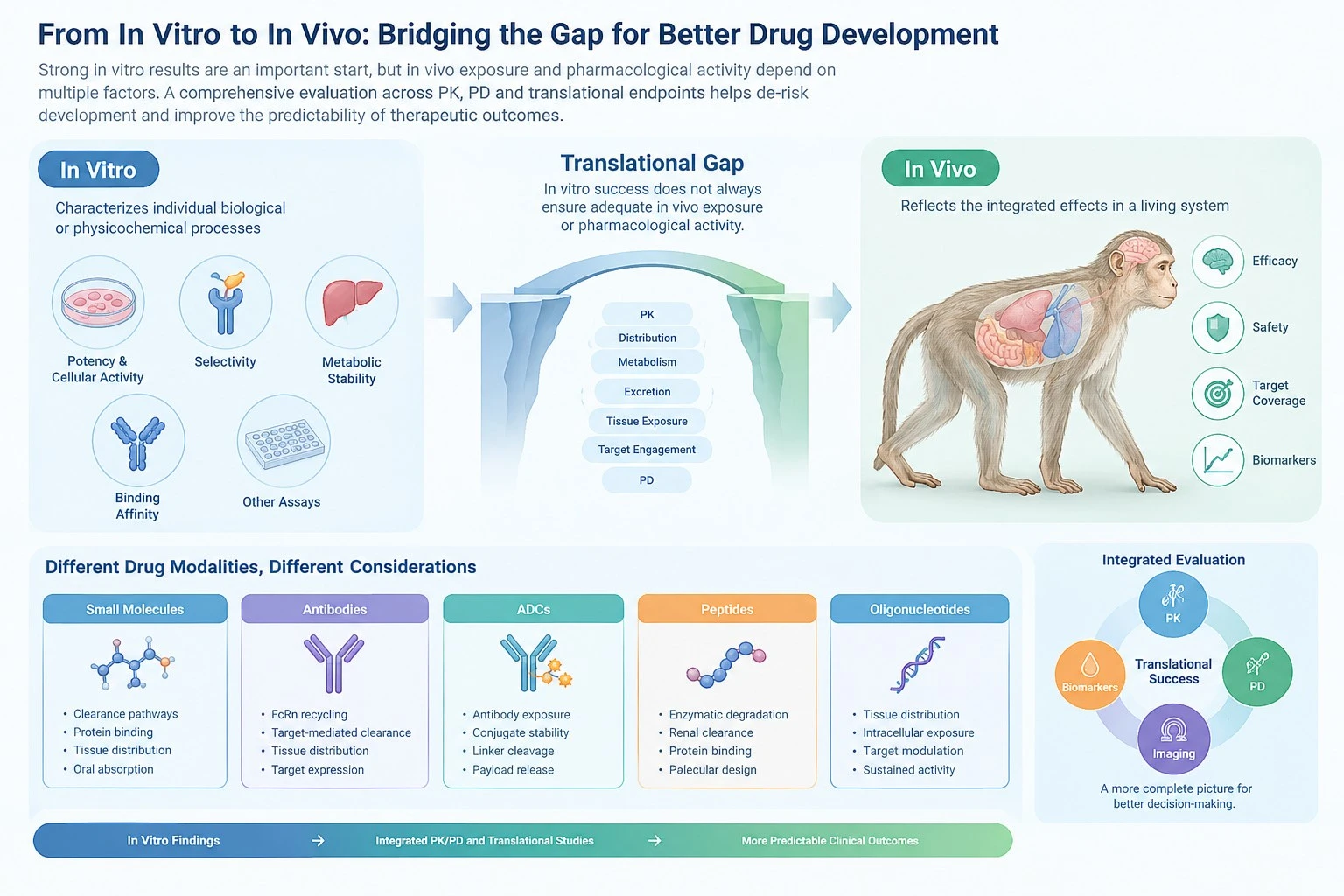
In vitro assays characterize one biological or physicochemical process at a time, under controlled conditions. In vivo drug disposition reflects the combined effect of absorption, distribution, metabolism, excretion, tissue exposure, target engagement and pharmacodynamics. How much each of those contributes varies substantially between drug modalities.
Modality-Specific Disposition
Liver microsomal stability is a weak proxy for systemic clearance on its own. Renal and biliary elimination, transporter activity, intestinal metabolism, plasma protein binding, tissue distribution and oral absorption all shape the observed PK profile. Hepatocyte stability adds a second data set, but extrahepatic clearance mechanisms remain outside both assays.
Antibody therapeutics sit in a different framework. Their disposition is generally not determined by CYP-mediated metabolism; systemic exposure and pharmacological activity are instead influenced by FcRn recycling, target-mediated clearance, tissue distribution, target expression and molecular properties. A long plasma half-life is compatible with poor target coverage at the site of action.
ADCs stack several variables on top of one another. After dosing, antibody exposure, conjugate stability, linker cleavage, drug-to-antibody ratio (DAR), payload release and metabolite formation all move at the same time. Total antibody is one number in a set that also includes the intact ADC and its pharmacologically relevant species, and it cannot stand in for the others.
Peptides and oligonucleotides run into versions of the same problem. Peptide half-life depends on enzymatic degradation, renal clearance, protein binding and molecular design, and a longer plasma half-life does not buy a proportional extension of pharmacodynamic activity. For oligonucleotides, plasma concentration often tracks pharmacological activity less closely than tissue distribution, intracellular exposure and sustained modulation of the intended RNA or protein target.
Integrating PK With PD Endpoints
The consequence for study design is straightforward: PK data should be read together with two things, where the drug acts and which molecular species are pharmacologically relevant.
Preclinical programmes therefore read PK alongside PD endpoints, tissue exposure, biomarkers, target engagement and functional outcomes. Where a programme needs them, longitudinal imaging and quantitative behavioral assessments add readouts on disease progression, tissue response, drug distribution or functional changes. The Prisys non-human primate (NHP) translational research platform combines NHP disease models with pharmacology, PK/PD evaluation, imaging and other study endpoints, sized to the objectives of each preclinical programme.
Integrated studies ask a harder question than whether a candidate produces an observable effect in an animal model. They test how exposure, target engagement, pharmacodynamics, efficacy and safety relate to one another, and they surface translational uncertainties before clinical development.
In vitro data remain the foundation of drug discovery. What preclinical research has to establish is the connection between those findings and in vivo exposure and pharmacological effects.


