RNA-based therapeutics (including mRNA, siRNA, and antisense oligonucleotides) and endogenous RNA molecules modulate host immune signaling. When recognized as pathogen-associated molecular patterns (PAMPs) or damage-associated molecular patterns (DAMPs), RNA triggers strong innate immune cascades through pattern-recognition receptors (PRRs), including Toll-like receptors (TLRs 3, 7, 8) and RIG-I-like receptors (RLRs).
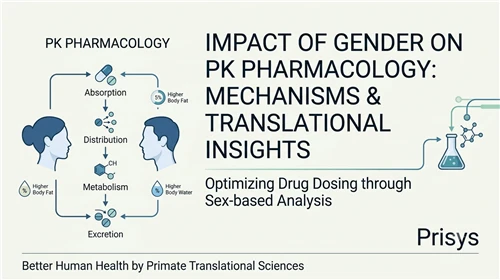
These immune activations are important for target efficacy and antiviral defense, but the downstream release of type I interferons (IFNs) and pro-inflammatory cytokines can markedly alter systemic drug absorption, distribution, metabolism, and excretion (ADME). Characterizing this interplay between RNA-mediated immunomodulation and pharmacokinetic (PK) profiles in translationally relevant species, particularly non-human primates (NHPs), helps optimize dosing regimens, predict drug-drug interactions (DDIs), and reduce clinical toxicity.
Impact on Drug Absorption and Intestinal Barrier Function
RNA-triggered innate immune activation induces systemic and localized inflammatory responses that affect mucosal drug absorption:
- Epithelial Integrity: Pro-inflammatory cytokines, specifically tumor necrosis factor-alpha (TNF-alpha) and interleukin-6 (IL-6), compromise tight junction proteins in the intestinal epithelium. The resulting increase in paracellular permeability can alter the passive diffusion rate of co-administered small molecules.
- Efflux Transporter Expression: Inflammation alters the expression of membrane transporters in the gastrointestinal tract. P-glycoprotein (P-gp/MDR1) expression is often upregulated during inflammatory cascades, which reduces the net bioavailability of P-gp substrates by promoting active efflux back into the lumen.
Effects on Systemic Drug Distribution and Tissue Delivery
Systemic inflammatory mediators alter plasma binding parameters and regional hemodynamics, with downstream effects on drug pharmacodynamics (PD):
- Plasma Protein Binding Shift: Acute-phase proteins such as alpha-1-acid glycoprotein (AAG) increase during systemic immune responses. Higher plasma AAG concentrations increase the bound fraction of basic drugs, which lowers the unbound (free) drug fraction available for tissue penetration and receptor interaction.
- Hemodynamic and Vascular Variations: Cytokine-induced vasodilation and microvascular changes re-route organ perfusion. In translational disease models, such as localized inflammatory or autoimmune NHP models, altered regional blood flow substantially influences target tissue exposure.
Suppression of Drug-Metabolizing Enzymes (CYP450 Pathways)
The clearest effect of RNA-mediated immune responses on drug PK is the down-regulation of drug-metabolizing enzymes, primarily the cytochrome P450 (CYP450) superfamily:
Type I IFNs and elevated cytokine levels down-regulate CYP gene expression at the transcriptional level and accelerate mRNA degradation. Reduced activity across major isoforms (e.g., CYP3A4, CYP1A2, CYP2C9) lowers intrinsic metabolic clearance. In preclinical models with underlying chronic inflammation (such as NHP models of chronic obstructive pulmonary disease), baseline CYP suppression can raise exposure of co-administered drugs and increase the risk of adverse off-target effects.
Alterations in Renal and Hepatic Elimination Pathways
RNA-mediated cytokine production directly modifies renal clearance mechanisms and biliary excretion:
- Renal Excretion: Elevated TNF-alpha and IL-1beta lower the glomerular filtration rate (GFR) and down-regulate renal organic anion/cation transporters (OATs/OCTs), which delays elimination of renally cleared compounds.
- Biliary Clearance: Hepatic inflammation alters the expression of canalicular transporters, including the bile salt export pump (BSEP) and multidrug resistance-associated proteins (MRPs), and impairs biliary elimination of lipophilic drugs and metabolites.
Translational Insights and NHP Model Applications
Evaluating RNA-mediated PK/PD interactions requires animal models that closely mimic human innate immune receptor expression, cross-reactive cytokine profiles, and metabolic enzyme regulation. Non-human primates offer close physiological homology to humans in TLR/RLR distribution, hepatic CYP regulation, and immune-mediated ADME responses.
Prisys Biotech's integrated NHP pharmacology platform supports characterization of RNA-mediated immune responses across validated, disease-relevant models:
- Targeted Inflammation & Autoimmune Models: PK/PD monitoring in complex NHP models, including Psoriasis, Uveitis, and Endometriosis models.
- Respiratory & Systemic Disease Models: Evaluation of pulmonary delivery, local and systemic cytokine kinetics, and metabolic profiling in NHP COPD models.
- Central Nervous System (CNS) Models: Bioanalysis and CNS exposure tracking in NHP Neuropathic Pain and CNS delivery models.
Conclusion & Research Capabilities
Understanding the interplay between RNA-mediated immune activation and drug pharmacokinetics is central to translating RNA therapeutics and complex biologics into safe clinical candidates. Prisys Biotech provides translational NHP pharmacology services, disease models, and bioanalytical support to help drug developers de-risk candidates early in the preclinical pipeline.
To learn more about our translational NHP platforms or discuss study design for a PK/PD or immunotoxicity program, contact the technical team at Prisys Biotech.
References
- Evers, M. M., et al. (2015). Transporters and cytochrome P450 source of variability in pharmacokinetics of oligonucleotide therapeutics. Advanced Drug Delivery Reviews, 87, 12-20.