Molecular imaging has become an increasingly important component of modern drug development. Technologies such as positron emission tomography (PET), single-photon emission computationally tomography (SPECT), magnetic resonance imaging (MRI), and hybrid imaging systems allow researchers to visualize biological processes in living subjects and quantify disease-related molecular changes over time.
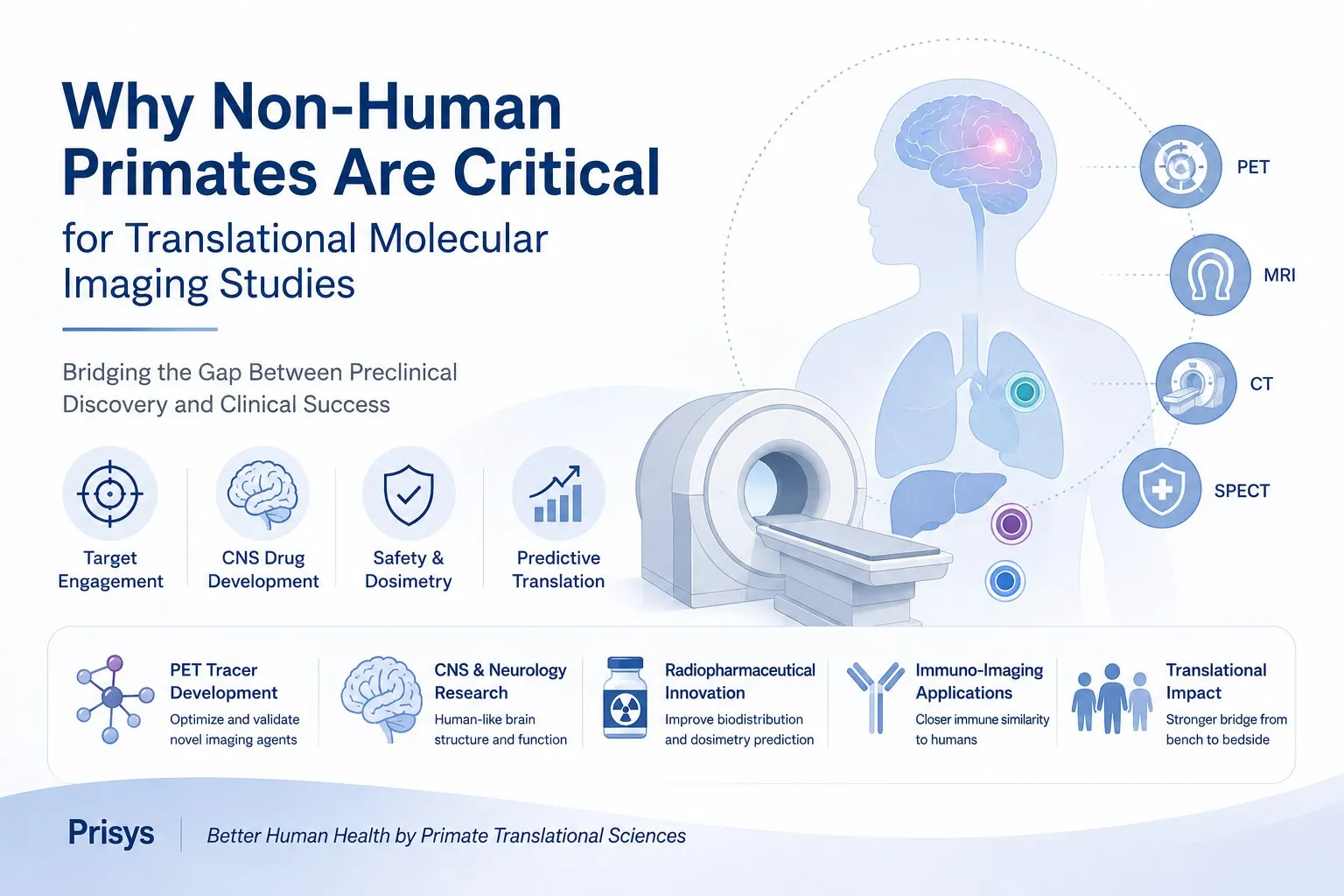
In preclinical research, molecular imaging is widely used to evaluate biodistribution, target engagement, pharmacokinetics, pharmacodynamics, and treatment response. However, translating imaging findings from rodents to humans remains challenging, particularly when imaging agents are designed to interact with complex biological systems such as the central nervous system, immune pathways, or metabolic networks.
Non-human primates offer a unique translational platform that closely resembles human biology, making them highly valuable for molecular imaging studies intended to support clinical development.
Why Rodent Imaging Models Have Translational Limitations
Rodent models are indispensable for early-stage research, but several biological differences can limit their predictive value for imaging applications.
The most significant challenge is anatomical scale and complexity. Rodent brains differ substantially from human brains in size, cortical organization, neuronal connectivity, and receptor distribution. These differences can influence tracer uptake patterns, signal quantification, and target accessibility.
Immune system differences also affect the development of immune-targeted imaging probes. Expression patterns of immune cell markers, cytokine pathways, and inflammatory responses often vary considerably between rodents and humans, potentially to discrepancies in imaging results.
Metabolic differences present another important limitation. Species-specific variations in enzyme activity, transporter expression, and clearance mechanisms can alter tracer pharmacokinetics and biodistribution, complicating the prediction of human imaging behavior.
As a result, promising imaging agents that perform well in rodents may demonstrate unexpected pharmacokinetic profiles, target binding characteristics, or background signals during clinical evaluation.
The Translational Advantages of NHP Molecular Imaging
Human-Like CNS Architecture
One of the most compelling reasons to use NHPs in molecular imaging research is their close similarity to the human brain.
Non-human primates possess highly developed cortical structures, complex neural circuits, and neurotransmitter systems that closely resemble those of humans. This similarity is particularly important when developing PET tracers targeting:
- Dopamine transporters and receptors
- Amyloid-β and tau pathology
- Synaptic density biomarkers
- Neuroinflammation markers
- Neurodegenerative disease targets
The larger brain size of NHPs also allows the use of clinical imaging protocols and image analysis methods that more closely mirror human studies. This improves the reliability of quantitative measurements and facilitates direct comparison between preclinical and clinical datasets.
For CNS drug development, NHP PET imaging can provide critical information regarding target occupancy, receptor binding, biodistribution, and longitudinal treatment effects before first-in-human studies.
Greater Similarity in Immune Biology
The increasing number of immunotherapies, biologics, and cell-based therapies has created demand for imaging techniques capable of monitoring immune activity in vivo.
Compared with rodents, NHPs exhibit immune systems that are considerably more similar to humans in terms of immune cell populations, cytokine networks, receptor expression, and inflammatory responses.
This similarity enhances the translational value of PET tracers and radiolabeled biologics designed to image:
- Activated immune cells
- Immune checkpoint pathways
- Inflammatory processes
- Cell therapy trafficking
- Therapeutic antibody distribution
For immune-targeted imaging agents, NHP studies often provide a more realistic assessment of target engagement and safety profiles prior to clinical translation.
More Predictive Pharmacokinetics and Metabolism
Successful imaging agents require favorable pharmacokinetic properties, including appropriate tissue distribution, target specificity, clearance rates, and signal-to-background ratios.
Non-human primates generally exhibit metabolic pathways and drug disposition profiles that are more comparable to humans than those observed in rodents. This allows researchers to better evaluate:
- Radiotracer biodistribution
- Blood clearance kinetics
- Organ-specific uptake
- Metabolite formation
- Dosimetry estimation
These factors are particularly important for novel PET tracers and radiopharmaceuticals intended for clinical imaging applications.
Applications in PET Tracer Development
PET tracer development represents one of the most important applications of NHP molecular imaging.
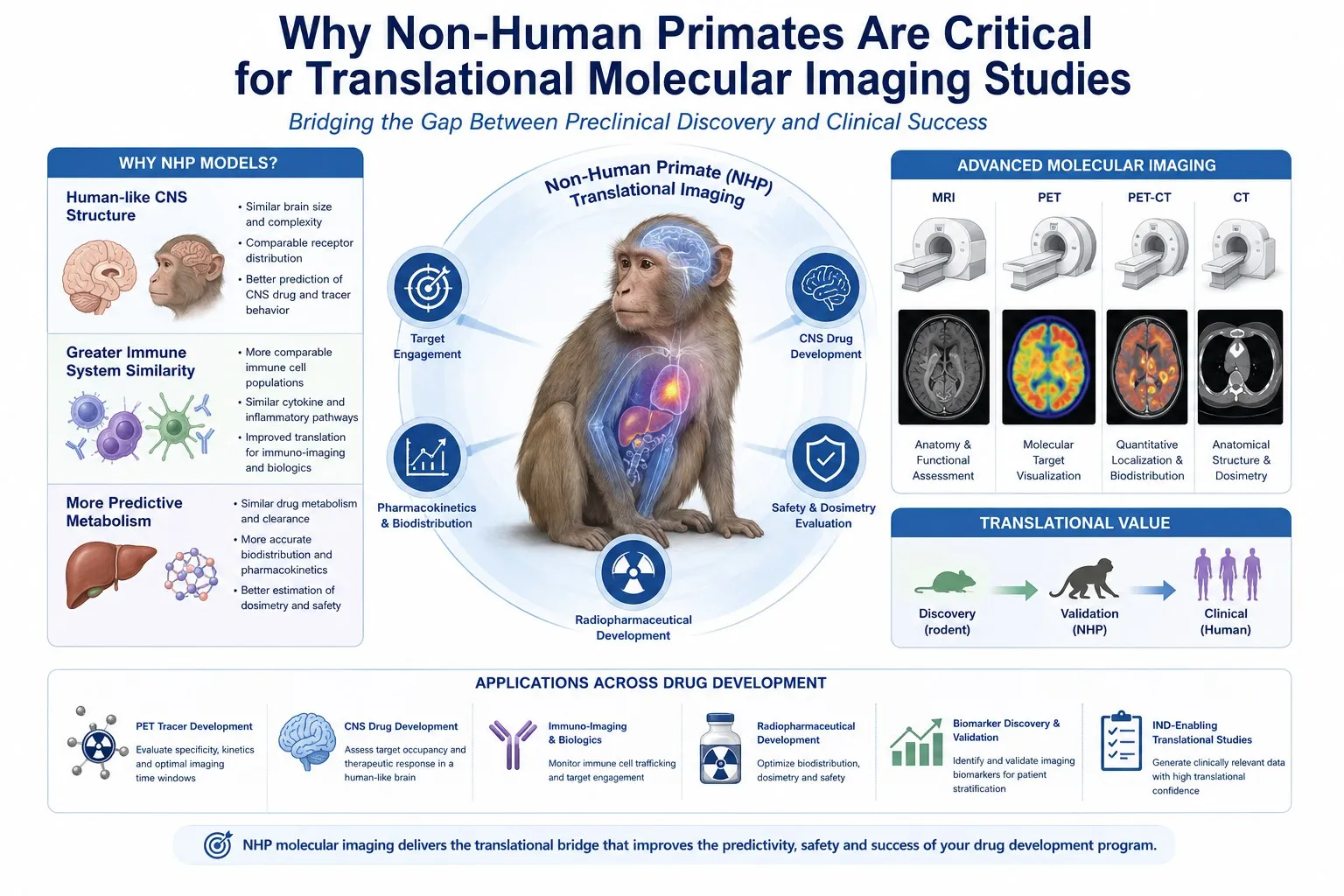
Many successful CNS imaging agents have relied on non-human primate studies to demonstrate target specificity and clinical feasibility before entering human trials. NHP PET imaging enables researchers to assess tracer performance using imaging systems, acquisition protocols, and quantitative analysis approaches that closely resemble clinical practice.
Typical applications include:
- Novel neuroreceptor imaging agents
- Neurodegenerative disease biomarkers
- Oncology-targeted radiotracers
- Immune imaging probes
- Fibrosis imaging agents
- Companion diagnostics for targeted therapies
Because PET imaging is inherently translatable between species, NHP studies can provide a direct bridge from preclinical validation to clinical implementation.
Supporting CNS Drug Development
Molecular imaging is increasingly used to support CNS therapeutic development beyond diagnostic applications.
PET imaging can quantify target occupancy, verify brain penetration, and assess pharmacodynamic responses following treatment. When combined with MRI-based structural and functional assessments, imaging biomarkers can provide a comprehensive understanding of therapeutic effects.
Non-human primates are particularly valuable for evaluating:
- Gene therapies
- Cell therapies
- Monoclonal antibodies
- Antisense oligonucleotides
- Neuroprotective agents
- Disease-modifying therapies
The combination of human-like brain anatomy and advanced imaging capabilities significantly improves confidence in translational decision-making.
Advancing Radiopharmaceutical Development
The rapid growth of theranostics and targeted radiopharmaceuticals has increased the need for translational imaging models that accurately predict human performance.
NHP imaging studies can support radiopharmaceutical development by evaluating:
- Whole-body biodistribution
- Target-specific uptake
- Radiation dosimetry
- Off-target accumulation
- Longitudinal safety monitoring
These datasets can help optimize candidate selection and support regulatory submissions before clinical studies begin.
Translational Imaging Platforms for Drug Development
Modern NHP imaging studies increasingly utilize clinical-grade imaging technologies, including MRI, CT, PET-CT, and image-guided intervention systems. These platforms allow researchers to apply imaging workflows that closely mirror those used in patients, improving continuity between preclinical and clinical development.
When integrated with pharmacokinetic analysis, biomarker evaluation, pathology, and behavioral assessments, molecular imaging becomes a powerful tool for understanding disease progression and therapeutic response in a highly translatable setting.
Conclusion
As molecular imaging continues to expand its role in drug development, the need for predictive translational models becomes increasingly important. While rodent studies remain essential for discovery research, non-human primates provide a critical intermediate step for evaluating imaging agents, validating biomarkers, and reducing clinical translation risk.
For PET tracer development, CNS therapeutics, and radiopharmaceutical programs, NHP molecular imaging offers a unique opportunity to generate clinically relevant data that more accurately reflects human biology. By bridging the gap between small-animal research and human studies, NHP imaging platforms continue to play a central role in advancing precision medicine and next-generation therapeutics.
FAQ
Q: Why are non-human primates important for PET tracer development?
A: NHPs possess brain structures, receptor distributions, and metabolic pathways that closely resemble humans, making PET imaging results more predictive of clinical performance.
Q: How does NHP PET imaging support CNS drug development?
A: NHP PET imaging enables assessment of target engagement, receptor occupancy, biodistribution, and pharmacodynamic responses in a brain environment similar to humans.
Q: Why are rodents insufficient for some molecular imaging studies?
A: Differences in anatomy, immune biology, metabolism, and target expression can limit the ability of rodent models to predict human imaging outcomes.
Q: What role do NHPs play in radiopharmaceutical development?
A: NHP studies help evaluate biodistribution, dosimetry, target specificity, and safety before first-in-human investigations.
Q: Can molecular imaging reduce clinical development risk?
A: Yes. Imaging biomarkers provide non-invasive, longitudinal assessments of target engagement and therapeutic response, helping researchers make more informed development decisions.