Pharmacodynamics (PD) is a core component of nonclinical drug development. It links drug exposure to biological activity, mechanism of action, and therapeutic response. For a New Drug Application (NDA), no single checklist of PD experiments fits every drug: what the pharmacodynamic package has to contain depends on the modality, the mechanism, the indication, the patient population, and the development stage.
The useful question is not the volume of PD data. It is whether those data support the proposed mechanism, demonstrate pharmacological activity at the exposures the program intends to use, and provide a defensible bridge into clinical development. Most programs get there with an integrated strategy: target engagement, functional pharmacodynamic endpoints, exposure–response analysis, biomarkers, and translational studies.
What Does Pharmacodynamics Demonstrate in Drug Development?
Pharmacodynamics describes what a drug does to a biological system, and in preclinical development it answers four practical questions: whether the drug reaches its intended target, whether it modulates that target or the downstream pathway as expected, whether the size of the effect tracks dose or exposure, and whether the effect can be tied to an endpoint measurable in humans.
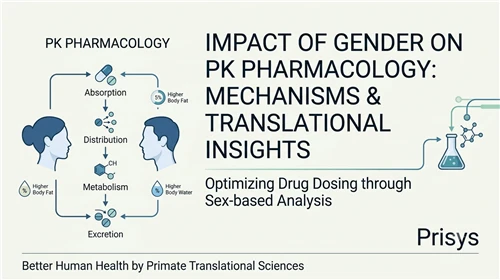
Pharmacokinetics (PK) describes what the body does to a drug: absorption, distribution, metabolism, and elimination. The two datasets answer different questions, and PD endpoints matter most when a mechanism turns on tissue distribution, target engagement, or pathway modulation that systemic plasma concentrations alone do not reveal.

Target Engagement: Linking Exposure to Mechanism
Target engagement is the measurement, direct or indirect, of interaction between a drug and its intended molecular target. The readout depends on the modality: receptor occupancy, enzyme inhibition, ligand binding, downstream signaling, or another mechanism-related biomarker, and it has to be taken in the tissue where the mechanism actually operates.
Binding in an in vitro assay does not by itself prove target engagement in vivo. The drug has to reach the tissue in question at sufficient concentration and stay pharmacologically active in that environment.
CNS programs are where this gets hard. The blood–brain barrier, regional tissue distribution, transporter activity, and local metabolism all shape whether systemic exposure turns into pharmacological activity in the brain. CNS programs therefore tend to need more than one approach, measuring tissue exposure, target engagement, and downstream pharmacodynamic effect side by side. Non-human primate (NHP) studies add a translational layer when the anatomy, physiology, or pharmacology relevant to the human condition is poorly represented in conventional models.
Dose–Response and Exposure–Response Relationships
A pharmacodynamic study that only shows a drug has an effect does half its job. Dose–response data add the other half: where pharmacological activity begins, how large the response gets, whether it flattens into a plateau, and how those changes track dose or systemic exposure.
Read together with PK or toxicokinetic data, an exposure–response analysis gives a mechanistic interpretation of the link between systemic exposure and biological activity.
Design follows the mechanism and the endpoint. Some pharmacodynamic effects are measured directly. Others need a surrogate biomarker or a downstream functional readout.
A CNS therapy is often tracked through cerebrospinal fluid (CSF) biomarkers, receptor occupancy, neurochemical changes, imaging endpoints, or quantitative behavioral measurements. Outside CNS, PD endpoints commonly include inflammatory biomarkers, metabolic parameters, physiological measurements, or disease-associated imaging readouts.
What matters is that the endpoint is sensitive enough, reproducible enough, and biologically connected to the mechanism being tested.
Biomarkers and Translational Pharmacodynamics
Connecting a pharmacodynamic finding in an experimental model to an endpoint that can be measured in patients is one of the persistent problems in drug development. Translational pharmacodynamics closes that gap by relating nonclinical biomarkers or functional endpoints to clinical ones, so that a result obtained in animals means something for dose selection in humans.
A translational biomarker is more useful when it has a clear biological link to the drug's mechanism and can be measured with comparable methodology across species. That is one reason to settle the PD strategy early instead of assembling it after clinical studies have begun.
Take a preclinical program that rests on a tissue-specific biomarker with no clinical assay. Its value for later dose selection or proof-of-mechanism work is limited. A biomarker measurable in both NHP studies and humans gives a far more direct bridge.
NHP studies contribute here when they allow collection of clinically relevant samples or assessment of endpoints that smaller animal models cannot reproduce: CSF sampling, imaging, physiological measurements, quantitative behavioral assessment.
Safety Pharmacology Is Related to PD, but Should Not Be Confused With Efficacy PD
Pharmacological activity is not confined to the intended therapeutic effect. A drug also interacts with biological systems outside its target, and safety pharmacology evaluates the consequences for the physiological functions that matter most for patient safety, principally cardiovascular, respiratory, and central nervous system function.
Safety pharmacology and efficacy-oriented PD have different objectives, but both datasets are easier to interpret inside one exposure framework. Knowing the drug concentrations associated with intended and unintended effects puts pharmacological activity and safety margin on the same scale.
Safety pharmacology is not an extension of an efficacy PD study. Its design, endpoints, and interpretation follow the applicable regulatory guidance and the properties of the candidate.
Why PK, TK, and PD Should Be Interpreted Together
PD results mean more when they are read against drug exposure. A biological response with no exposure data attached is hard to interpret, while PK data alone cannot establish whether the exposure achieved is enough to produce the intended pharmacological effect, which is why the three datasets are usually analyzed as one chain.
Combine PK, toxicokinetics (TK), and PD, and you get an exposure–response framework:
Exposure → Target Engagement → Pharmacological Effect → Functional or Disease-Related Response
That chain makes dose selection for the next study tractable, and it is how you judge whether the exposure reached in an animal model is relevant to the intended clinical exposure. The relationship differs by modality: small molecules, antibodies, peptides, oligonucleotides, and cell or gene therapies each need a different approach to exposure and PD assessment.
The Role of NHP Studies in Translational PD
NHP studies are not a default requirement in every drug development program. Their value rests on the scientific question and on how much of the relevant biology the species supplies that other models cannot, which is why the justification for using them has to come from the objectives of the program rather than from a template.
Where they earn their place, NHP studies combine pharmacological endpoints with clinically relevant sampling, imaging, physiology, or behavioral assessment.
In CNS, NHP studies support CSF biomarkers, brain-related pharmacodynamic effects, neurobehavioral endpoints, and imaging-based measures. Imaging modalities such as MRI, PET/CT, and CT allow longitudinal assessment of disease progression, tissue change, biodistribution, or pharmacological response without relying only on terminal tissue collection. That capability pays off when the question requires repeated measurement in the same animal rather than comparison across terminal time points.
Behavioral endpoints add a functional layer. Automated three-dimensional behavioral analysis quantifies changes in movement, posture, locomotion, scratching, and related behaviors. Where functional change is part of the therapeutic mechanism, those measurements complement molecular and imaging biomarkers.
Reproducibility and Study Design Matter as Much as the Endpoint
An endpoint is only as useful as the study that produced it. Controls, baseline measurements, dose selection, sampling schedules, assay performance, statistical analysis, and the biological variability of the model all determine whether a pharmacodynamic readout will hold up when someone else tries to reproduce it.
In longitudinal designs, repeated measurements add information about individual trajectories and treatment response.
Cross-species comparability is the harder problem. When rodents, NHPs, and humans are studied with different assays or different endpoints, an apparent difference is as likely to come from assay methodology as from biology. Translational planning therefore starts from the intended clinical question and works backward to the nonclinical model and PD endpoint.
What Does a Strong Nonclinical PD Package Look Like?
No fixed set of pharmacodynamic studies defines an adequate NDA package. A coherent package answers the questions that matter for the individual program, and in practice the PD strategy builds a logical chain that runs from drug exposure through target engagement and mechanism to a functional or disease-related endpoint that can be carried into clinical translation.
Drug Exposure → Target Engagement → Mechanism → Pharmacological Response → Relevant Functional or Disease Endpoint → Clinical Translation
The evidence needed at each step varies. A receptor-targeting small molecule, an antibody, an oligonucleotide, and a gene therapy product each need a different PD strategy. CNS, oncology, immunology, metabolic, and respiratory programs work with very different pharmacodynamic endpoints.
A large PD package is not automatically a strong one. What counts is whether each endpoint answers a defined scientific question and feeds into the exposure–response and mechanism-based interpretation.
From Pharmacodynamic Data to Clinical Development
Pharmacodynamics belongs to a continuous translational framework rather than to a standalone section of an NDA. Early in development, PD studies confirm mechanism and demonstrate proof of pharmacology; during candidate selection and nonclinical development they support dose and exposure selection and characterize the relationship between efficacy and safety.
As a program approaches clinical development, translational biomarkers and clinically relevant endpoints take on more weight. Plan the PD strategy across development stages; assembled retrospectively for a regulatory submission, it rarely holds together.
For a CRO supporting these programs, the work is not a sequence of isolated experiments. Translational pharmacology depends on model selection, study design, sample collection, analytical methods, and interpretation being treated as one workflow.
Prisys Biotechnologies Co., Ltd. (浦灵生物, Prisys Biotech) runs non-human primate research across multiple therapeutic areas, combining NHP disease models with PK/PD evaluation, clinical-equivalent imaging, behavioral assessment, and biomarker analysis where the science calls for it. The aim is data that can be read inside a broader translational framework rather than as isolated results.
Conclusion
The pharmacodynamic requirements for an NDA do not reduce to a fixed list of experiments. What the package has to contain follows from the drug, its mechanism, the indication, the development stage, and the regulatory strategy.
The test is whether the nonclinical evidence establishes a credible relationship between exposure, target engagement, pharmacological activity, efficacy-related endpoints, and safety. Designed as a set, PD data explain why an effect occurs, at what exposure it occurs, and how that finding is expected to translate into clinical development.
The operative question is not how much PD data is required. It is which pharmacodynamic evidence establishes a convincing link between the drug, its mechanism, and the intended clinical effect.
FAQ
Q: Is pharmacodynamic data required for every NDA?
A: Pharmacodynamic information is part of most development programs, but which studies and endpoints an NDA needs depends on the product and the program.
Q: What is the difference between PK and PD?
A: PK describes drug exposure over time. PD describes the biological effects associated with that exposure. Read together, they establish the exposure–response relationship.
Q: Why is target engagement important in preclinical drug development?
A: Target engagement shows that a candidate interacts with its intended biological target in the relevant biological system. That evidence strengthens the mechanistic reading of the downstream pharmacological effects.
Q: When are NHP studies useful for pharmacodynamic evaluation?
A: NHP studies are useful when species-specific physiology, anatomy, pharmacology, or clinically relevant endpoints supply information that other models cannot provide. Their use has to be justified by the objectives of the development program.
Q: Can imaging be used as a pharmacodynamic endpoint?
A: Yes. Depending on the drug and indication, MRI, PET, CT, and other imaging approaches give quantitative or longitudinal measures of disease progression, drug distribution, target engagement, or treatment response.
Q: Why should PD studies be planned early in drug development?
A: Early PD planning keeps nonclinical endpoints aligned with the mechanism of action and with likely clinical biomarkers. That alignment makes the translation from animal studies to clinical development more coherent.